
Surah Ali Imran Ayah 3
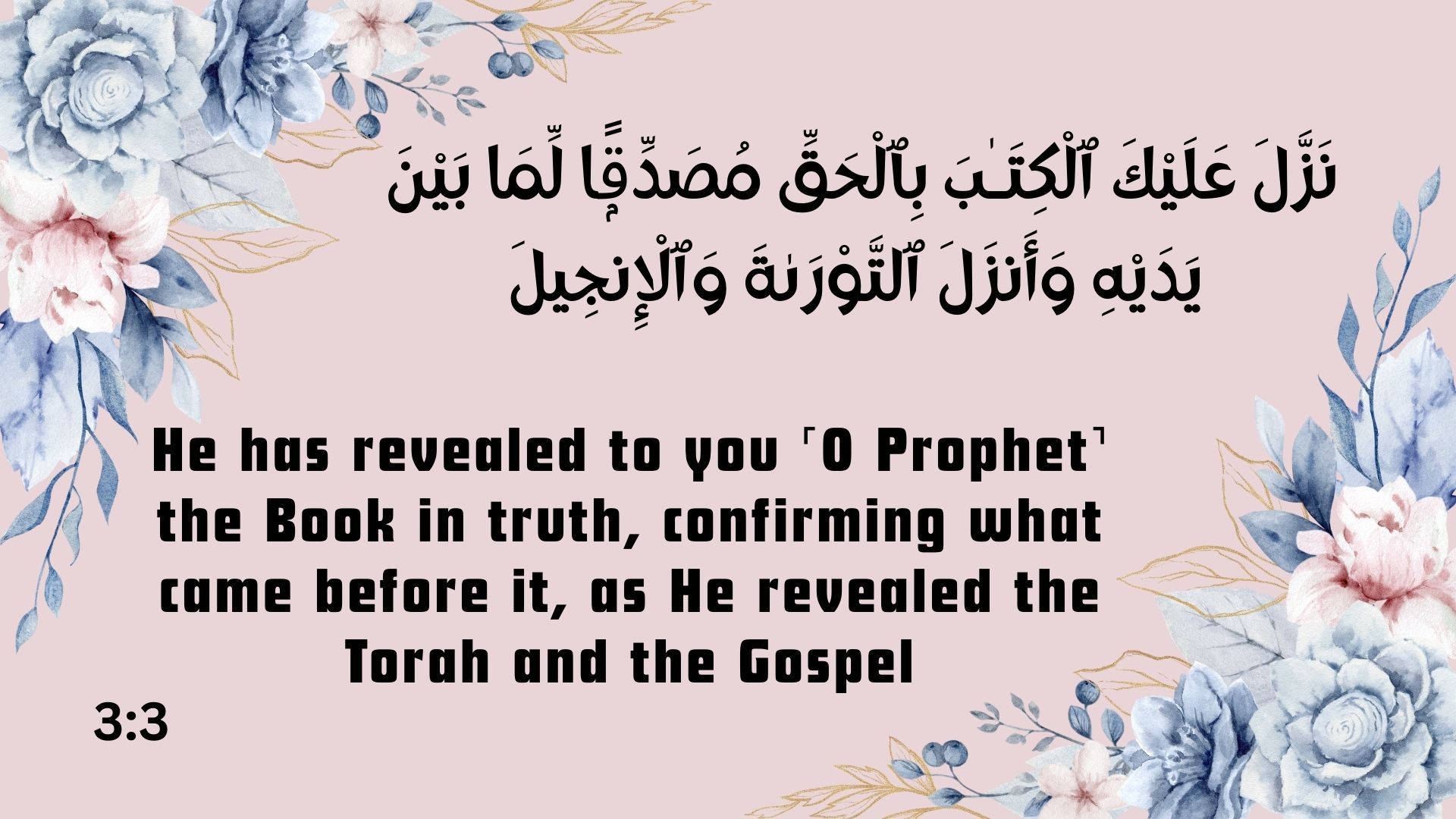
When we pause at the word بِالْحَقِّ, Subhan Allah, something profound strikes the heart: it was revealed at the Perfect Time.
The Qur’an descended exactly when the world needed it most. i.e. at a time when nations had deviated due to the alteration of scriptures, when moral compasses were broken, and when humanity was spiritually lost and fragmented.
And when we turn the focus toward ourselves, those who strive to understand the Qur’an bit by bit can clearly relate: every ayah reaches us at the right moment. The right advice. The right direction. The right warning. The right consolation and clarity - arriving precisely when our hearts needed it most.
If we reflect honestly on our own lives as a whole, many of us can identify a phase when we were distant from the Qur’an, followed by a turning point when we were drawn back to it. When we compare the before and after, we realize that moment was not random - it was the exact time we were ready to begin a Qur’anic journey. Life had shaped us, softened us, humbled us enough to finally connect.
Then, when we reflect on the ḥikmah behind Allah revealing the Qur’an gradually - as opposed to earlier scriptures that may have been revealed in a single instance or over a shorter period - the contrast between نَزَّلَ and أَنزَلَ becomes strikingly meaningful.
The time required to build belief within a disbelieving or polytheistic society is vastly different from the time required to establish laws within an already believing community. The Qur’an did not rush hearts into obligations. It raised Iman first.
And this ayah directly addresses one of our deepest struggles today:
the quality and consistency of our ‘ibadah, and the heaviness we sometimes feel when submitting to commands that touch our personal, social, and moral lives.
The moment we truly believe - in the real sense of Iman – then the Qur’an, even if it were to enter our lives in the form of Torah-like commandments, would feel far lighter than it does today. The burden is not in the command itself, but in the state of the heart that receives it.
That is precisely why Allah ﷻ gave the first generation years to nurture Iman before introducing detailed do’s and don’ts. Hearts were prepared before obligations were placed. Faith was rooted before responsibility was demanded.
Yet reminders of Iman remain essential - just like food, water, and air. The heart, by its very nature, is constantly wavering. Even though the Madinan period contained fewer verses focused purely on belief compared to the Makkan era, Allah ﷻ maintained a perfect balance: reminders of iman, warnings against nifaq, and clear cautions against disbelief.
Nothing was random. Nothing excessive. Nothing lacking. Subhan Allah! What a precision. And what a mercy that Allah nurtures hearts before He commands limbs.